Earth divers
For a wonderous moment in the movie Sinners, the people dance outside of linear time, enfolded by the freedom of an endless now. Sammie is playing at Club Juke and through his music dancers and musicians from their past, present, and future across vast geographies collide and weave in a glorious transcendance, the roof itself giving way because whatever he has opened cannot be contained in a structure of wood and heartache. His music opens a portal through which everyone's ancestors and futures can join together with these sinners in the present. Linear time is one more instance of a euclidean geometry imposed on a curvilinear world. Just like all those lines and squares they used to turn land into property. In a continued fracturing of linear time, Buddy Guy appears at the end, sorry about the spoiler, an elderly Sammie, reminding us that the story being told of a juke joint in the Jim Crow south is not is not distinct or separate from our lives today. The story itself is a portal through which multiple layers of reality coexist.
A year before Sinners came out, I wrote my own story of music as portal when Kwe is summoned to a sweat lodge. The young woman whose singing calls Kwe to her reaches across centuries and geography prompting her journey home. It occurs to me that, in this context, the word "sinners" operates much the same way that Bad Indians operates for Indigenous people. I'm going to need to do some more thinking and reading about this, but it seems that way. Early in the movie Sammie's father, a preacher, tells him to stay away from those sinners. He doesn't of course, and even after everything goes sideways he stays with the sinners, refusing to be one of the good ones.
I'm not interested in dragging or damning the good ones. They stayed alive, they protected stories and language. Survived things they weren't meant to survive. So I'll honour that work and that strength. But I'm not following them into battle. The world they have found safety in is not one that is truly safe, not even for them because if there is anything we have learned in the past decade, it is that being one of the good ones won't save you. But I'm really not interested in the good ones being a target. The problem is the system that requires us to be good, and ultimately damns us all as bad anyway.
This has been a good year of immersing myself in Ojibwe stories, and I'm proud of what I've done .. but some of it has been the euclidean geometry of contemporary politics and social justice. Of seeing connections between things, I'm good at that, but it can be it's own kind of shielding from what these stories contain. So I want to circle back. I want to look beneath the surface. I want to stick my own head under the water, draw near some portals, see what I can bring up or call in. I want to avoid answers for a little while and just open myself up to wonder.
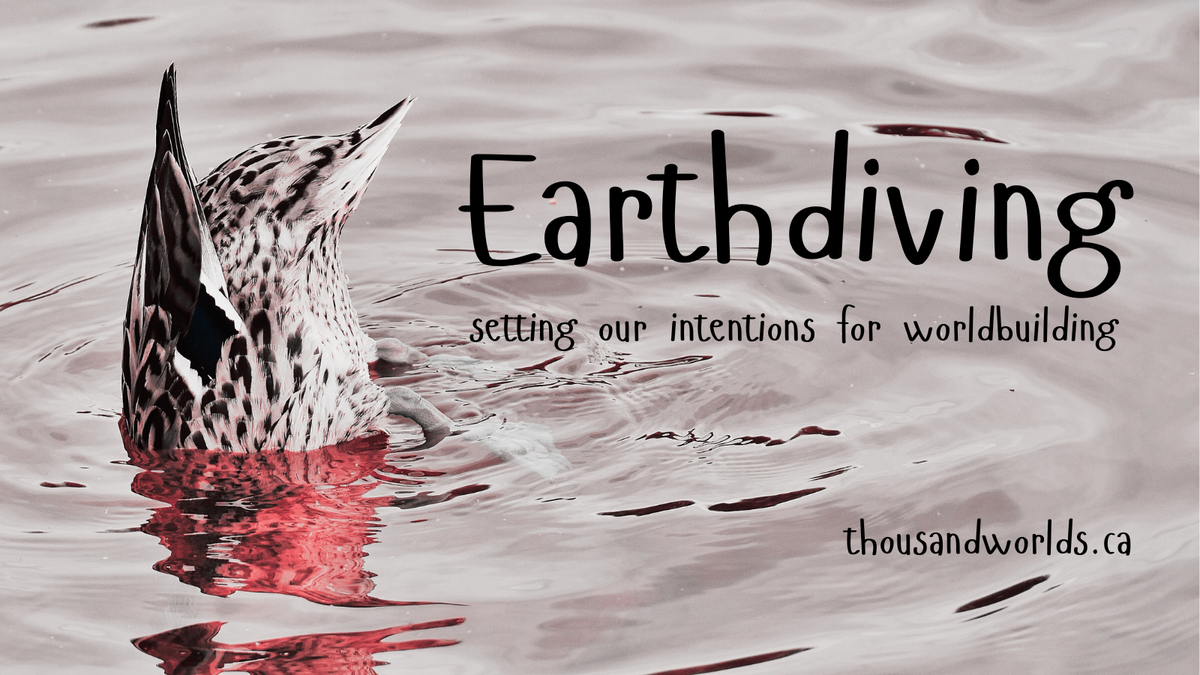
So we're going to begin 2026 by spending some time with the idea of earth divers and how we can, in the words of Gerald Vizenor who wrote a book about earth divers, connect dreams to earth and metaphor to reality. Vizenor's book is mostly fiction, short stories about real things, and so inspired by Vizenor, this part of the project will be a mix of fiction and reflective essays. I'll be inviting earth divers from other backgrounds and places to contribute their own fiction and reflections.
We're going to go back to the Nanaboozho stories about the flood, look at them a little differently perhaps, a little deeper. With a little more wonderment and trickstering. We'll go back to creation, a conversation between stones, as well as Nokomis' big splash since it's her medicines scattered on the lakebottom that I suspect the animals are bringing to the surface along with the dirt that Nananboozho throws around to build a new world. We will revisit the death of Nanaboozho's nephew the wolf, go with him when he slays the Toad-Woman, the healer of manitous, and dive with the animals.
You can grab a copy of the book, it was published in 1981 so it may be challenging to find, but while I'll be referencing it here and there this isn't a follow along kind of project. I'll be thinking alongside him but mostly for how he informs the stories in the William Jones archive, how his writing on earth divers helps us see the world that Jones was documenting. Maya Chacaby's dissertation will also be a great resource and you can be sure that a lot of books and blogposts will find their way into wondering about earthdivers. Like Rabbi Danya Ruttenberg's reflection on another flood story, What a Prophet Is(n't) that inspired me to ask more questions about the flood story I grew up with.
There are many Anishinaabe stories about the flood and the events that led up to it. So I will leave you with a digression on the roots, and consequences, of orthodoxy with a little explainer about why I rely on the Jones archive and read other versions alongside it rather than instead of or in some kind of competition to see which one is currect and orthodox.
When we think about religion, particularly the Big Three, orthodoxy entered the chat relatively late and, unsurprisingly, it is connected to empire building in one capacity or another. It's easier to have a cohesive empire when everybody believes the same thing. Which isn't to say that before the imposition of orthodoxy everybody was always ok with diverging beliefs or the existence of variable stories underpinning those beliefs but as Sonia Sulaiman pointed out in a recent bluesky thread on this, it's a big leap from "I hate how that guy practices religion" to "I'm going to arrest that guy for practicing the wrong religion." Societies either become ok with multiple belief systems, or they pick one. Which means that the dominant form of any religion is inevitably the "pick me" version and that's kind of depressing.
Communities under threat come up with their own forms of orthodoxy. When the people with the authority to make such things stick are sticking things onto you that are not true, it's kind of hard to argue with them when there isn't a single version you can point to as being true. Especially when having a Single True Version is very important to those people. It gets even more complicated when you realize that the things oppressed communities tell those who are tasked with studying or assimilating them often contain misdirection. These are the versions that get created in order to get the missionaries off our backs. I read somewhere recently that during the colonial period Indigenous people were seen as salvageable because our beliefs were often close enough to their own that it made us easy to convert and I wonder how many of these pick me versions of our stories were made up for exactly that reason.
Then there are the versions of our stories that have been watered down and Christianized. Sometimes we tell these versions ourselves, sometimes the anthropologists or the missionaries retell them in a way that makes sense to them. Like the way that zhemnido, the great mystery, became the Creator, a personalized being who is vaguely male and acts surprisingly like the Christian God the missionaries brought with them.
This is why I like the Jones archive, and why my friend Maya recommended it to me when I went to her asking questions about the Anishinaabe afterlife. These stories were collected in 1906, told to Jones by leaders of the Bull Head Clan in the area that would eventually become Thunder Bay, people who were in the earliest years of colonization. Britain, and then Canada, may have laid claim to these vast swathes of geography but they didn't actually care that much about the people themselves until it was time to get the resources out of our land and waters. Treaty 3, the treaty that covers this area, was signed in 1873, well within the lifetime of these elders and storykeepers. The book Treaty No. 9: Making the Agreement to Share the Land in Far Northern Ontario in 1905 by John Long documents the superficial impact that the religious and political life of Canada had on these communities at this time. I mention the Treaty No. 9 book because although the lands that would become known as Thunder Bay were already covered by Treaty 3 at this point, they are mentioned early in the commissioner's travels. Plus it mentions my own ancestors, Noah and Moses Wesley. Dad always did say we were descended from Noah and Moses.
It is, as Maya notes, the only document of its kind for traditional Ojibwe stories.
I sound like I'm making an argument for it's orthodoxy, I'm not. Because not only are there other versions with more colonial goop on them, but there are other versions from other Anishinaabe communities that are equally ungooped. Its history makes this particular volume of stories a reliable foil for those others, not to judge authenticity or correctness but to think alongside and also to help us recognize the goop, the things that don't belong or might be missing. Because that colonial goop is important to consider even while we try to read through it: Why these changes or adaptations? What need did these changes meet? Whose need did they meet?
The only way out is through, not back. We can try to pick off the colonial impositions and community-based misdirection but it's all a big mess and imagining a single perfect past isn't going to get us anywhere good anyway. No movement that seeks to Make [whatever] Great Again is going to be great for anyone but those in charge of the movement. Which is why, as much as I centre this blog around the Jones archive, I also go looking for as many other versions of these stories as I can find to see where they take us in their similarities and their differences.
I am far more interested in where a story takes us than whether or not it is the Chosen Story, because the Chosen Story doesn't usually take us anywhere good anyway.
I'm going to take a break for a couple of weeks to get ready for this dive. I'll need to finish reading that dissertation I mentioned, and got a stack of books coming in the next couple of weeks that includes Stephen Graham Jones' own graphic trilogy called Earthdivers that begins 100 years in the future before travelling to the past, that I want to make sure I absorb, so I wish you joy in whatever holidays you celebrate while we call back the sun.
baamaapii!
From the Miramichi Reader, which chose Bad Indians Book Club as one of their best nonfiction of 2025: “There is so much to learn here, so many starting points for dialogue, so many opportunities to clear space and grow. Patty Krawec emerges as a voice for the ‘bad Indians,’ all those pushed to the margins but refusing to be defined by them.” — Anne Smith-Nochasak
Order your copy of Bad Indians Book Club today in the US at Bookshop.org, Amazon, Barnes and Noble, and in Canada: Indigenous owned GoodMinds, as well as Amazon, indie books, and Chapters Indigo. Get it wherever you get your books.
Podcasts and Interviews!
Missing Witches Part 1 and Part 2
Turning Pages
A Matter of Faith: A Presby Podcast
CBC's The Next Chapter
New York Society Library
Shawn Breathes Books
Book reviews!
Featured by Poets and Writers as one of "best books for writers"
Featured by the Library Journal's reading list for Native American history month
Featured by Goodreads for Native American Heritage Month
Featured by Powell's Books for Native American Heritage Month
The Miramichi Reacher
I've Read This
Pickle Me This
Foreword
Reading Our Shelves
Red Pop News
On Our Radar: 49th Shelf
Ms Magazine's top 25
Summer Must Reads Toronto Star
CBC Books 45 Canadian nonfiction books to read this fall
My list of "must read books" for CBC on TRC Day, Sep 30 2025
An excerpt published by Baptist News Online.
Do you want me to zoom into your local bookstore or bookclub? Talk with you on your podcast? I can do that. patty.krawec@gmail.com For larger professional settings you can email Rob Firing at rob@transatlanticagency.com
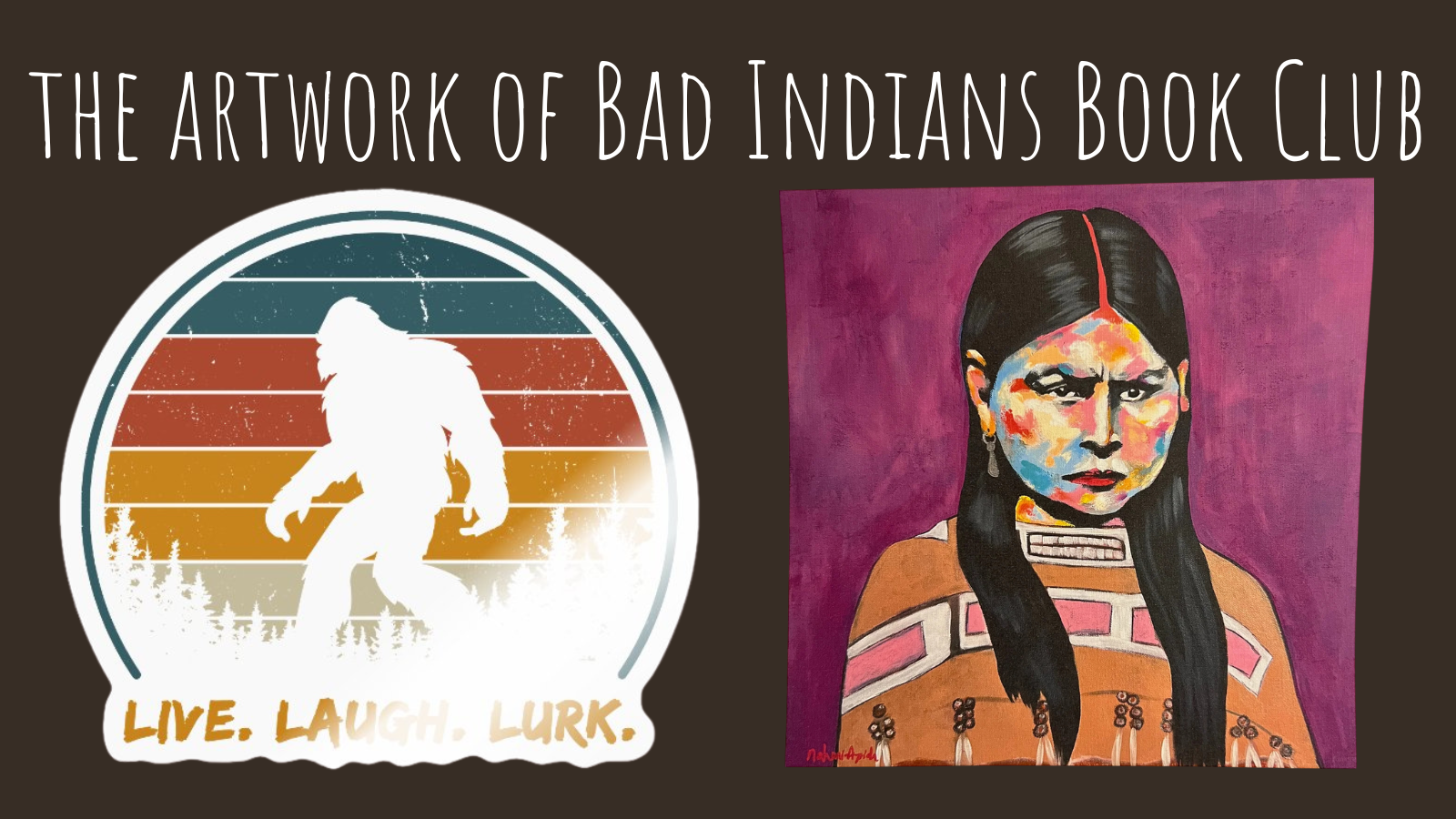
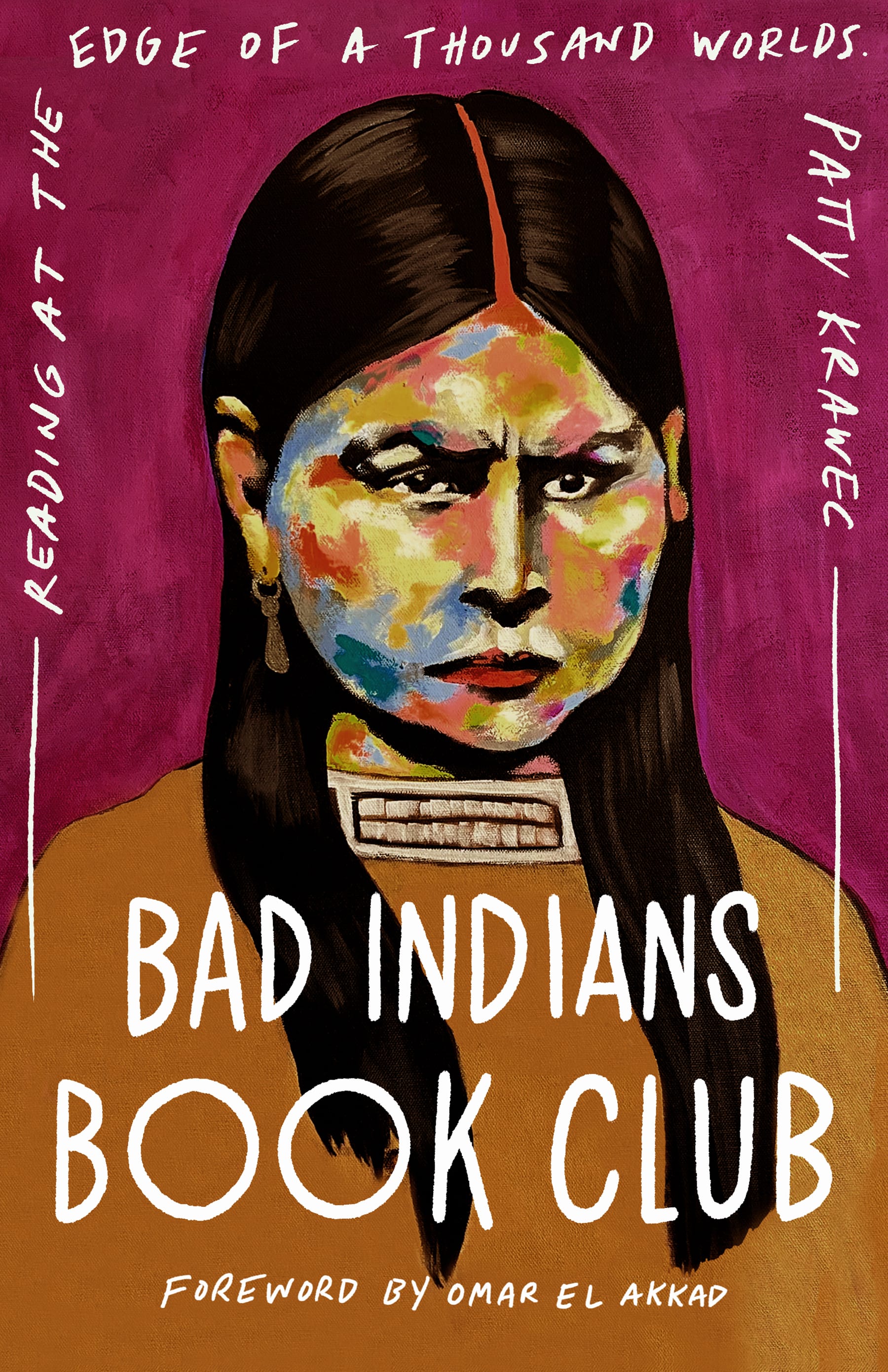
Want to add Bad Indians Book Club merch to your life? Get your Live Laugh Lurk on at Johnnie Jae's shop where she sells tshirts, stickers, tote bags and so much more. And that cover art by J NiCole Hatfield is stunning isn't it? She sells prints, cards, and more on her website.

And don't forget to join up with the Nii'kinaaganaa Foundation. Every month we collect funds from people living on Indigenous land and redistribute them to Indigenous people and organzers. You can find out more information on the website which is now powered by ghost, which means that you can become a subscriber there just like you are here! You can sign up on the website to be a monthly donor or make a one-time donation right here.