The Crawfish go to War
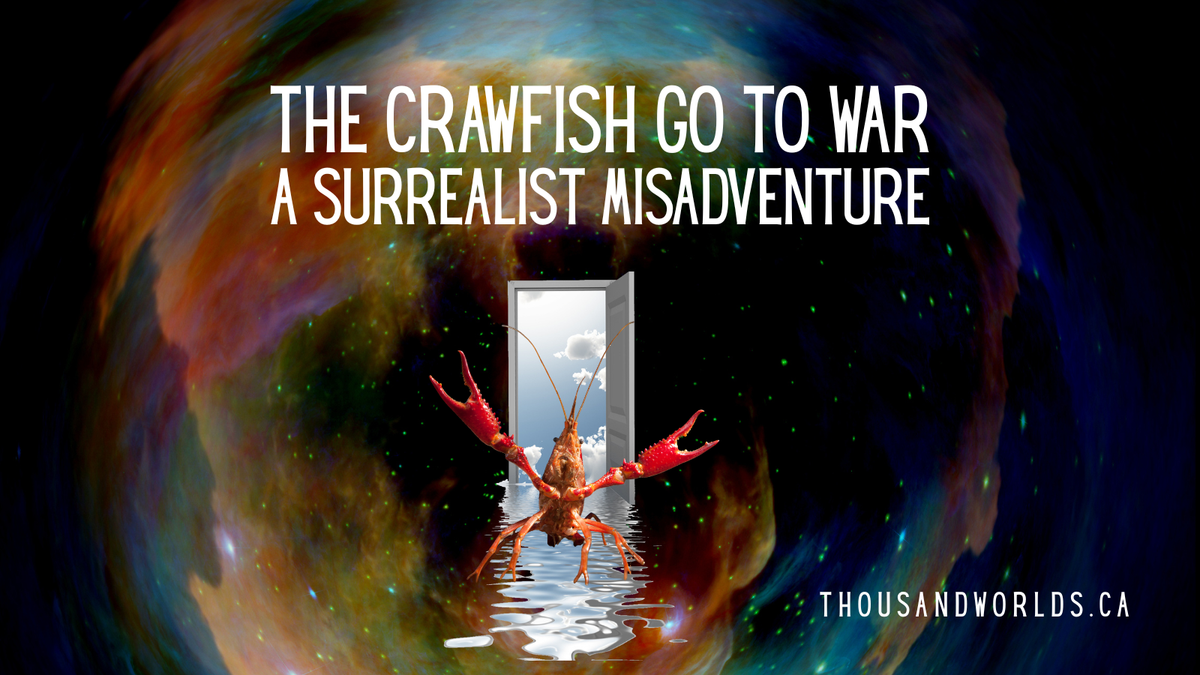
A surrealist misadventure.
In the long ago, there was a town by the sea where some Crawfishes lived. The chief among them thought about going to war, so he told all his men that he had thought about going to war and they decided to figure this out by having a dance party, as one would. During this dance party two of the Crawfish, who had their hands broken off, told everybody about the time last summer when Raccoon ate a whole bunch of them. This was a great reason to go to war, so they had a dance off to see who would be the leader and the winner was one that had two of his fingers broken off by That Raccoon.
Off they went. Crawfishes in canoes crossing the sea.
I need somebody to create that image by the way, something I can print on a tshirt or a notebook cover or maybe even a tattoo.
They landed on the most beautiful beach and I'll tell you, there were so many of them that the beach was black with Crawfishes. Raccoon noticed these tasty treats, and he knew that if he just lumbered up to them they would scatter so he found a rotting log with some kind of green phosphorescence growing on it and rubbed it all over himself before laying down and pretending to be dead.

That broken finger Crawfish who won the dance-off was wandering about on his own and saw the Raccoon. He poked and prodded, circling around, to see if the Raccoon was alive and after pinching him everywhere, including his anus, he decided the Raccoon was dead. Now, when somebody pinches your bum you react don't you? Pull your bum away from them? Raccoon did not and based on the lack of that anticipated reflex the Crawfish, tragically underestimating Raccoon's self control, believed that Raccoon was dead and he sang a song about finding the Raccoon that ate so many Crawfishes last summer because he is the finder of things.
Which is an odd song, but we don't judge here. I personally am not above singing random nonsense songs about what I'm doing.
This banger drew a crowd and soon all the Crawfishes were swarming about this Raccoon, poking and pinching. Some questioned the risk and the war chief said of course he's dead, look how blue/green he is! Which, I'm not sure that's how dead raccoons look but I guess Raccoon knew that this would fool the Crawfishes so I can accept that I don't know everything.
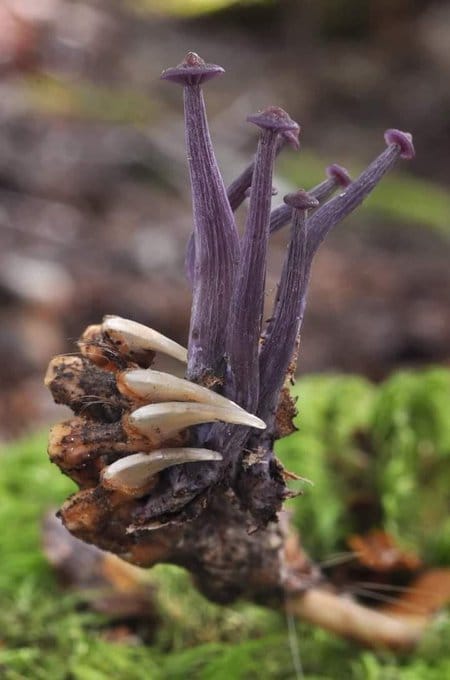
Meanwhile the Crawfishes (who will eat anything including rotting vegetation, small animals, sworn enemies, and each other) kept swarming, poking, pinching, and even entering his throat and his anus at which point Raccoon had enough. He did pull his bum away the way you would expect and the Crawfishes went bananas with the realization that Raccoon was alive.
Strangely, the two fingered war chief started singing another song about the Raccoon's reaction, calling him an old woman as an insult, and while this crawfish is singing his song the Raccoon eats about half of them. Raccoon then takes the horn that the two-fingered war chief had been tooting, pierces him in the head with it, and goes off to tell his Raccoon friend that the Crawfishes had gone to war and he found them.
Raccoon and his friend have a feast.
Somehow a few of the Crawfishes make it back to their canoes and hightail it back home only to find that the women heard old two-finger's song (including the insulting reference to the raccoon being an "old woman") across the water and were mocking them by singing it. Then they sang a song in which they called the warriors "creaking trees" which Idk, doesn't seem like a major diss but the Crawfishes sure took it that way and basically responded with "I know you are but what am I?"
Meanwhile, some of them were very concerned about old horn in the head and called over an elder crawfish to ask what was to be done and the elder crawfish said "Ah, finish him off. Drive that horn all the way in and be done with it."
So they did.
and here the buttocks of the ruffed grouse hang aloft.
What a story. What a wonderfully absurd story. Seriously, go back and read it again. Not with any intention, just take a moment to imagine the whole thing. This is an important story. Not all aadisokaanan end with that phrase, but some do and it's significant as a warning to those who don't pay attention. So take a moment with this story and see which details leap out at you. Don't try to make it about anything, it's not an allegory. Just notice the details that seem significant to you.

Welcome back. You got your details? Great.
I am super late to the party on surrealism as a social or political movement. Like super-duper late although the ideas are very familiar so I think it's just a new vocabulary rather than a whole new way of thinking . I've heard of Afro-Futurism and Sun Ra and other artists in that genre, but I hadn't connected it with surrealism and the long history it has in the Black imagination where it is deeply entwined with Black liberation movements. Then I heard this recent episode of Movement Memos about unlearning and how critical it is for organizers and thinkers:
 Negin Owliaei
Lewis talks about a lot of interesting things but towards the end Kelly asks Lewis about surrealism as "a strategy for perception, a way of loosening the grip on what feels natural of expected." Lewis described it as a way to undermine European Western constructs of reality, using surprise and strangeness to shift perspective, undermine specific assumptions about reality and my brain wowed in a way that it doesn't often do. Which is kind of a sad statement.
This is what aadizookaanan do. They wow our brains, invite us to bend our reality, not just for the purpose of the story but to challenge what we think of as normal or expected. The stories themselves are tricksters using surprise and strangeness to shift us out of whatever has gotten us stuck and boy are we stuck. Of course we can learn from them, see a little of ourselves reflected in them, but first we open ourselves up to wonder. This is a story about crawfishes and a raccoon doing crawfish and raccoon things. It reminds us that the natural world has agency and life that extends far beyond our own perception. They have their own stories, and maybe we know some of them from the time when we knew how to talk with each other. It's not that long ago. In Mean Spirit, a novel written about the Osage murders in the early 20th century, Linda Hogan writes about Osage elders who still knew how to do that.
Surrealism is the exaltation of freedom, revolt, imagination, and love ... [It] is above all a revolutionary movement. Its basic aim is to lessen and eventually to completely resolve the contradiction between everyday life and our wildest dreams. By definition subversive, surrealist thought and action are intended not only to discredit and destroy the forces of repression, but also to emancipate desire and supply it with new poetic weapons ... Beginning with the abolition of imaginative slavery, it advances to the creation of a free society in which everyone will be a poet - a society in which eveeryone will be able to develop his or her potentialities fully and freely.
Robin D.G. Kelley cites from the Chicago Surrealist Group's statement from 1976 in his book Freedom Dreams. and he goes on to note that many of the principles of surrealism were present in the African diaspora long before surrealism was even named. For Indigenous peoples, and the Black diaspora is descended from Indigenous Africans, surrealism is a return to ourselves rather than something completely new. It is just a new vocabulary for something we have always known.
Extraordinary scene from Sinners in which Sammy's music opens a portal drawing in past, present, and future, reaching across oceans and collapsing (or expanding) into an everpresent now. Do the other dancers even know who is dancing among them? I have no idea. Maybe they are aware, maybe that awareness is something we can grow into. At the end of the clip you see the vampires, lead by the Irishman Rennick, who wants to capture Sammy's gift for himself, to see his own ancestors from whom he has long been severed.
Surrealism as a movement emerged in Europe early in the 1900's as a way to shake themselves loose from the increasingly restricted and proscribed world that they lived in. Hundreds of years earlier people who had colonized the whole world, bringing back the sciences and philosophies of peoples that few took the time to know, had somehow managed to miss the riches now stored in their libraries, museums, and private collections. Instead of a radically expanded consciousness, Enlightenment era thinkers fit what they could into their still somehow Christian post-Christian Enlightenment and discarded the rest as primitive trinkets, creating pure white euclidean lines of progress out of the prismed light and fractal geometries of other worlds and ways of knowing.
In the early 1900s a group of thinkers took another look at those riches, finding portals to other worlds, a thousand if you will, in the lines and masks of other peoples and indeed they are. That's exactly what they are. These images of other worlds are somehow connected to our own through what you might call portals that medicine people know how to access. Wherever we are .. what they call surrealism is our realism. Our stories and artwork encode our philosophies and we need to be shaken free of these European ways of thinking just as they did. But for us it is a homecoming and that homecoming is as close as our own stories however they are told and made manifest. Indigenous ways of knowing are different from what have become conventional ways of knowing things.
A single way of knowing might be comforting, might feel stable and secure. Might seem like truth in a sea of chaos. But a single way of knowing leads us towards a single inevitable solution, sending us to war against an enemy that we greatly, and tragically, underestimate because we have only learned to see the world through a single lens. This is as true of contemporary geopolitics as it is true of movement building and spiritual or religious beliefs. I've often reflected on growing up evangelical, a single way of knowing that leads inexorably towards a skewed and dangerous interpretation of Revelations that now dominates political agendas.
If we are going to survive we need surrealism, we need to take seriously other ways of knowing. We need wonderment. Anishinaabe aadisokaanan are one way to do that because they emerged from this place and if you want to belong here then learning the stories that emerged here is going to be part of that. What are the stories that emerged in the place where you now live? What stories were imported and laid over or completely displaced the original stories? At what cost? What have we lost through the disruption of these stories?
There's a lot in this absurd little story about leaders who dream of war and then find reasons to justify it, about revenge fantasies and tragic miscalculations. We are prone to dismiss the absurd or fantastical, myself included. Like enlightenment era thinkers, we try and fit these narratives into our world instead of suspending our world for a little while and entering theirs, letting the story open a doorway, a portal, back to ourselves. So rather than impose my own story on you, I leave you to wonder about it yourself, to think about those details that made an impression on you and what you may learn from a world where crawfishes go to war.
baamaapii
Bad Indians Book Club, if you haven't read it yet, invites readers to consider the many worlds offered by marginalized writers. Not as a way to save this current system, but as viable ways to think and exist on their own. It was important to me to include poetry in almost every chapter, which is itself a whole other way of observing the world around us, and it seems to me that I was writing about a surrealist lens without that particular vocabulary.
Freedom Dreams: The Black Radical Imagination by Robin D. G. Kelley was first published in 2002 and this anniversary edition includes a new introduction in which Kelley reflects on the past 20 years and how his vision has expanded. This book languished in my tbr pile for far too long ... otoh I came to it at exactly the right moment.
Have you found yourself frustrated by people's unwillingness to adjust their thinking after you've fact-checked them and demonstrated that the things they believe are simply not true? If so, I've got the book for you. Radical Unlearning: The Art and Science of Creating Change from Within by Lewis Raven Wallace runs the gamut from the neuro-science of thought and change to the surrealist thinking that had me turning to Freedom Dreams. It addresses the question of how do I talk to people across any number of religious or political divides by examining the processes by which we have changed. Many of the chapters have questions or exercises you can use to engage your own radical unlearning.
Aimé Césaire is a poet and decolonial thinker whose work Discourse on Colonialism can be bought or downloaded for free. I read it for the first time several years ago and it is a glorious, unfiltered manifesto against colonialism and all who adhere to it. You'll read it in about an hour, but it will stay with you forever. Like this observation about Hitler, which can be read here in context.
“Yes, it would be worthwhile to study clinically, in detail, the steps taken by Hitler and Hitlerism and to reveal to the very distinguished, very humanistic, very Christian bourgeois of the twentieth century that without his being aware of it, he has a Hitler inside him, that Hitler inhabits him, that Hitler is his demon, that if he rails against him, he is being inconsistent and that, at bottom, what he cannot forgive Hitler for is not crime in itself, the crime against man, it is not the humiliation of man as such, it is the crime against the white man, the humiliation of the white man, and the fact that he applied to Europe colonialist procedures which until then had been reserved exclusively for the Arabs of Algeria, the coolies of India, and the blacks of Africa.”
― Aimé Césaire, Discourse on Colonialism
Saving Time: Discovering a Life Beyond Productivity Culture by Jenny Odell is examines our relationship with time and how clock time disconnected us from the natural world, early colonists grading "native populations as being more or less “progressed” into modernity based on how removed their systems of time seemed from nature."

Order your copy of Bad Indians Book Club today in the US through Bookshop.org, and in Canada: Indigenous owned GoodMinds, as well as indie books which will show you which local bookstore has it in stock. Get it wherever you get your books.
Podcasts and Interviews!
Science and Nonduality network Sounds of Sand podcast
The Radical Sacred
Missing Witches Part 1 and Part 2
Turning Pages
A Matter of Faith: A Presby Podcast
CBC's The Next Chapter
New York Society Library
Shawn Breathes Books
Book reviews!
In Windspeaker News
Featured by Poets and Writers as one of "best books for writers"
Featured by the Library Journal's reading list for Native American history month
Featured by Goodreads for Native American Heritage Month
Featured by Powell's Books for Native American Heritage Month
The Miramichi Reacher
I've Read This
Pickle Me This
Foreword
Reading Our Shelves
Red Pop News
On Our Radar: 49th Shelf
Ms Magazine's top 25
Summer Must Reads Toronto Star
CBC Books 45 Canadian nonfiction books to read this fall
One of the 100 Best Books of 2025 from Hill Times
My list of "must read books" for CBC on TRC Day, Sep 30 2025
An excerpt published by Baptist News Online.
Do you want me to zoom into your local bookstore or bookclub? Talk with you on your podcast? I can do that. patty.krawec@gmail.com For larger professional settings you can email Rob Firing at rob@transatlanticagency.com
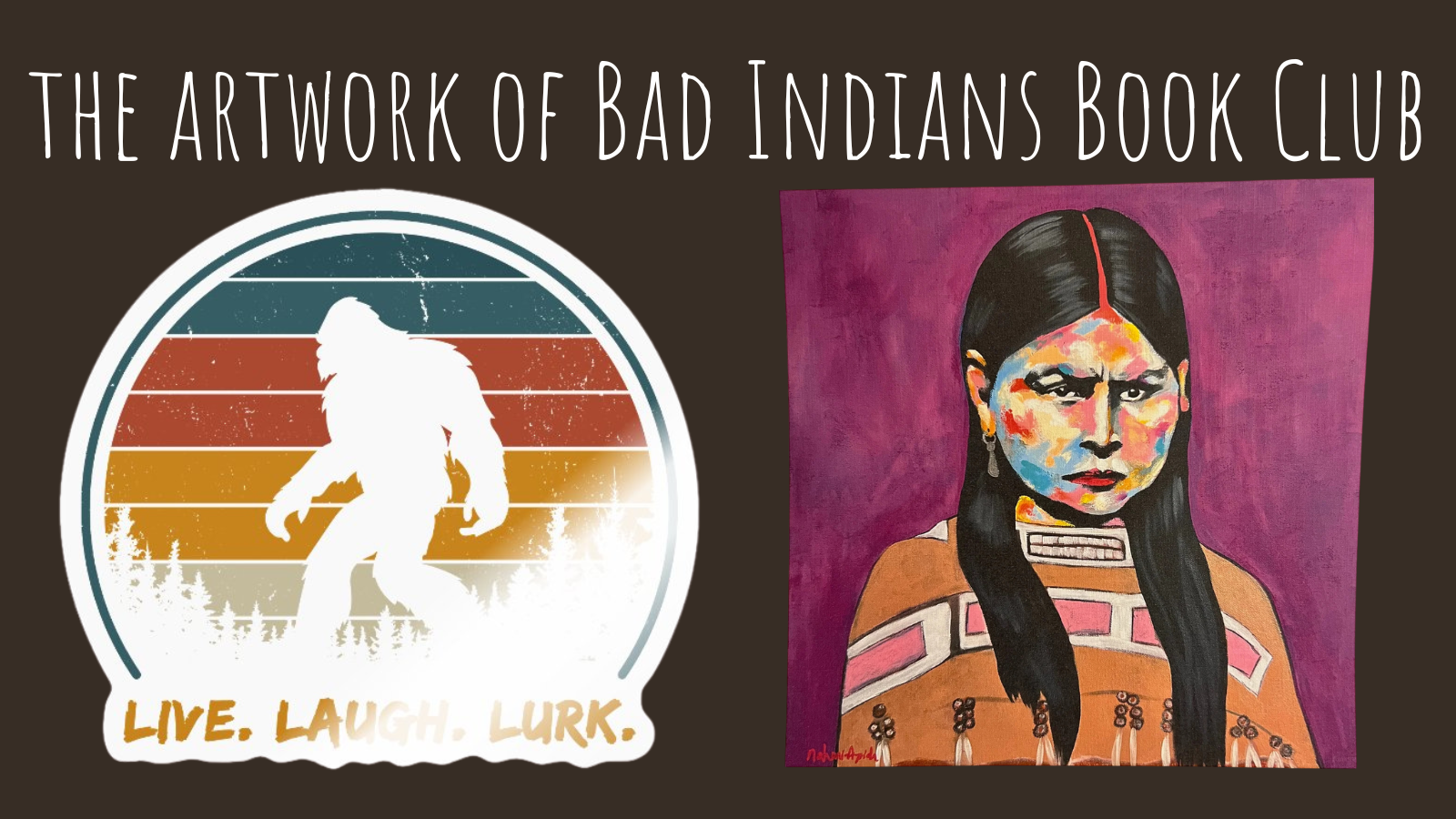
Want to add Bad Indians Book Club merch to your life? Get your Live Laugh Lurk on at Johnnie Jae's shop where she sells tshirts, stickers, tote bags and so much more. And that cover art by J NiCole Hatfield is stunning isn't it? She sells prints, cards, and more on her website.

And don't forget to join up with the Nii'kinaaganaa Foundation. Every month we collect funds from people living on Indigenous land and redistribute them to Indigenous people and organzers. You can find out more information on the website which is now powered by ghost, which means that you can become a subscriber there just like you are here! You can sign up on the website to be a monthly donor or make a one-time donation right here.